
April 24, 2026
Moving into a new home is exciting. Everything feels fresh, the landscape is newly installed, and the lawn looks ready to grow into a beautiful outdoor space.
But after the first year or two, many homeowners in Gainesville begin noticing something frustrating. Despite watering regularly and maintaining the lawn properly, the turf may struggle to thicken up or stay consistently green.
This situation is actually very common in newer communities, and the cause often lies just below the surface.
The good news is that in most cases the problem isn't the grass at all - it's the soil environment supporting it. Once the soil improves, lawns typically respond with stronger growth and better resilience.
Understanding how construction soils behave can help homeowners make smarter decisions that improve their landscape long term.
Healthy lawns don't just depend on watering, mowing, and fertilizer. They depend heavily on the soil environment where roots develop.
The upper few inches of soil is where turfgrass roots absorb water, oxygen, and nutrients. If that soil lacks structure or organic matter, the lawn may struggle even when it receives proper care.
Many landscapes in North Florida are built on soils that are naturally sandy and low in organic material. While sandy soil has some advantages - such as good drainage - it can also make it difficult for lawns to retain moisture and nutrients.
Over time, this can lead to:
When the soil environment improves, the lawn's ability to grow and recover also improves.
When homes and communities are built, the ground is shaped and graded so the property drains properly and foundations remain stable.
During this process, soils are often compacted and redistributed to create a level surface for construction. While this step is necessary for structural stability and drainage, it can leave the upper soil layer with less organic material than what naturally develops in undisturbed landscapes.
Once turf is installed, the grass must begin rebuilding its root environment within this soil.
Many lawns eventually improve on their own over time as organic material slowly accumulates. However, in some situations the process can take years without additional soil improvement.
When soil lacks structure or organic matter, turfgrass often sends signals that something below the surface needs attention.
Homeowners may notice:
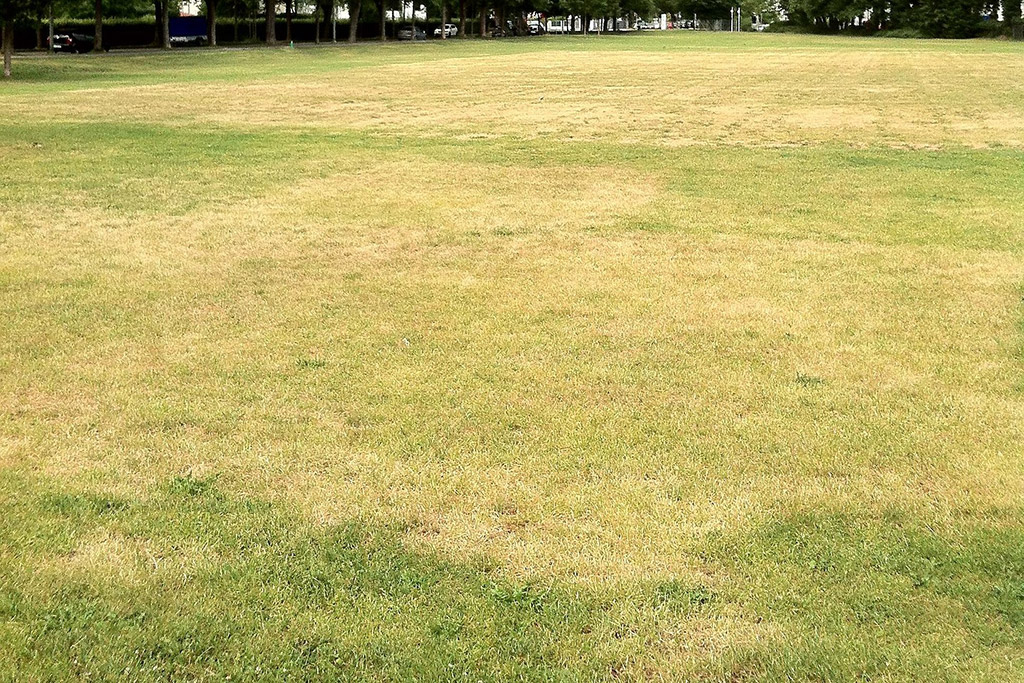
These symptoms don't always mean the lawn is unhealthy - they simply indicate the soil may need support.
Improving soil quality is one of the most effective ways to help lawns reach their full potential.
Practices that improve soil structure help create an environment where roots can grow deeper and access nutrients more efficiently.
Some common soil improvement techniques include:
Aeration
Aeration relieves soil compaction and allows oxygen and water to reach deeper into the root zone.
Organic Topdressing
Applying a thin layer of organic soil material across the lawn helps introduce organic matter into the soil over time.
Soil Biology Development
Healthy soils contain beneficial microorganisms that break down organic material and release nutrients for plants.
These improvements gradually rebuild the soil environment and allow turf to develop stronger, deeper root systems.
When turf develops deep, healthy roots, the entire lawn becomes more resilient.
Strong root systems help lawns:
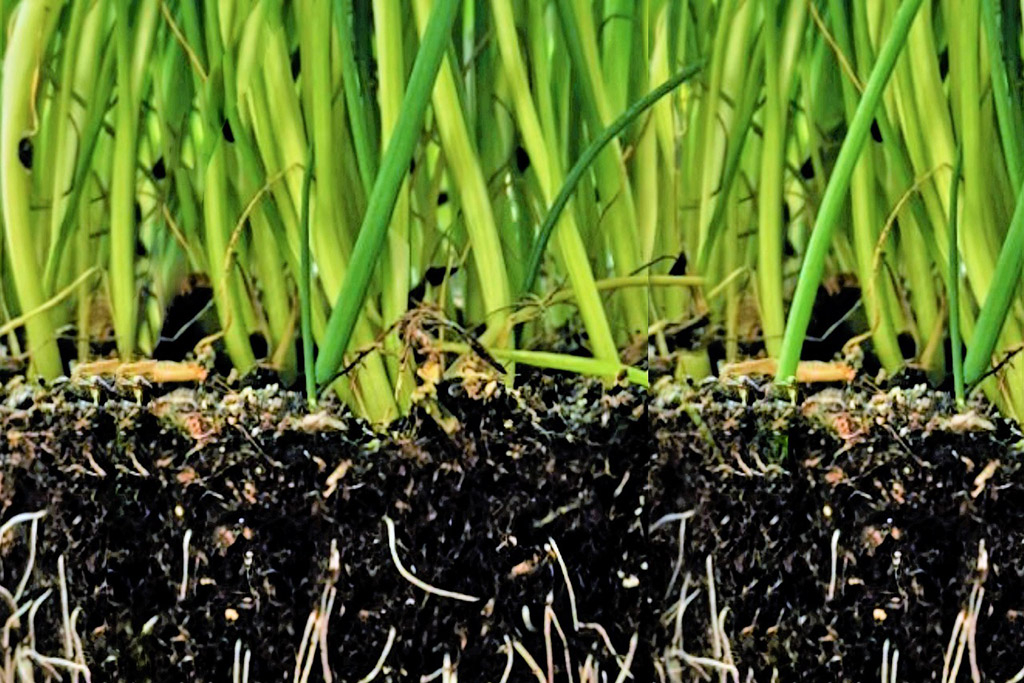
Instead of constantly treating surface symptoms, improving soil conditions strengthens the lawn from the ground up.
Landscapes naturally evolve over time. As leaves break down, grass clippings return nutrients to the soil, and organic matter builds, the soil environment gradually improves.
However, thoughtful soil management can accelerate this process and help lawns perform better sooner.
For homeowners throughout Gainesville, understanding the role of soil health is often the key to achieving a greener, thicker, and more resilient lawn.
When the soil is healthy, the lawn has everything it needs to thrive.
- Allegiance Landscaping Leadership Team
Destination: Excellence