
June 19, 2026
Some properties completely disappear after sunset.
Others become more impressive at night than they are during the day.
In Florida, that difference usually comes down to lighting.
Not brighter lighting.
Not more fixtures.
Better lighting.
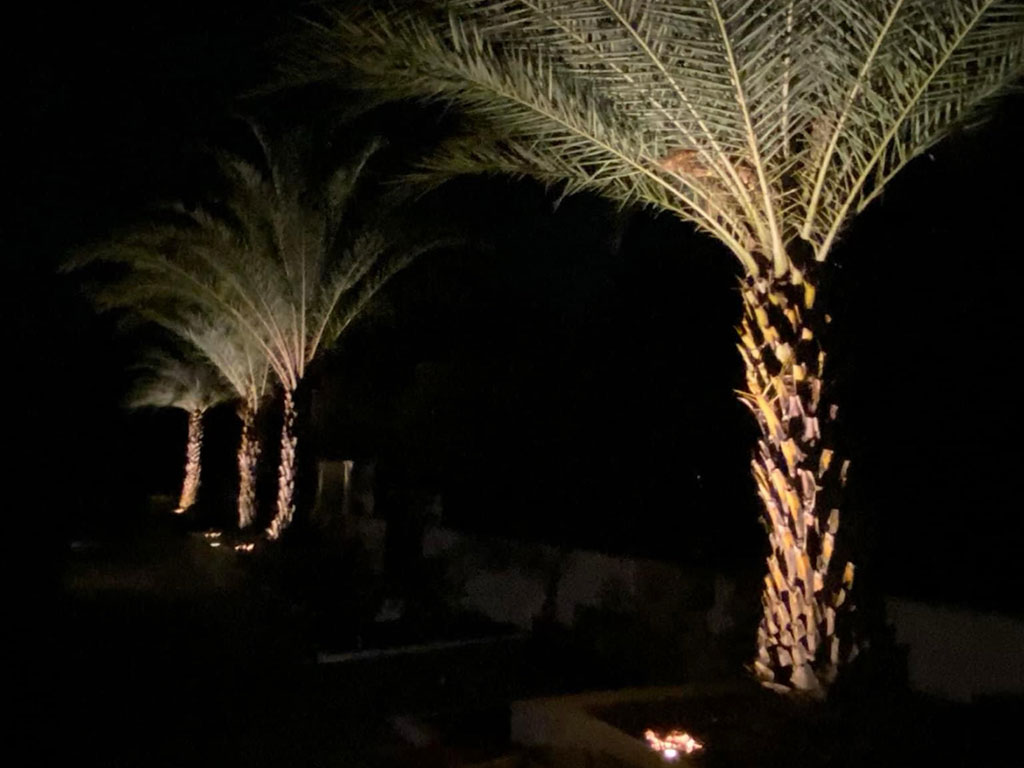
A thoughtfully designed landscape lighting system changes how a property feels after dark. It shapes first impressions, improves visibility, highlights architectural details, creates atmosphere, and helps outdoor spaces feel intentional long after the sun goes down.
For commercial properties and managed communities throughout North Florida, landscape lighting is no longer just decorative. It has become part of the overall property experience.
Because when landscapes go completely dark every evening, half of the investment disappears with them.
Florida landscapes behave differently than landscapes in most other parts of the country.
Everything grows faster.
Humidity stays higher.
Rainfall is heavier.
Outdoor spaces stay active longer throughout the year.
That means lighting systems in Florida need to handle:
A lighting system that looks clean during installation can begin struggling surprisingly fast if long-term conditions are ignored.
We commonly see older systems where:
Good landscape lighting in Florida is not just about appearance.
It is about durability, placement, adjustability, and long-term functionality.
Spring is when Florida landscapes start becoming visually active again.
Turf greens up quickly.
Annual color returns.
Palms begin pushing new growth.
Flowering plants become more vibrant.
Outdoor gathering spaces become busier.
At the same time, evenings become warmer and outdoor activity increases significantly across:
Properties that feel visually inviting after dark often create a stronger overall impression for:
Installing or adjusting lighting during spring also allows systems to be evaluated before heavy summer storm cycles begin placing additional stress on fixtures and wiring.
One of the most effective lighting techniques in Florida landscapes is uplighting mature trees and palms.
Large trees already anchor the landscape visually during the day. Proper lighting simply allows them to continue doing that after sunset.
This technique works especially well with:
The goal is not to overpower the tree with brightness.
Strong uplighting creates:
In Florida evening breezes, illuminated palms and canopy trees create subtle movement that makes landscapes feel significantly more alive after dark.
And on larger properties, mature trees often become some of the strongest nighttime focal points available.
Path lighting is one of the most overused and improperly installed lighting features on many commercial properties.
More fixtures do not automatically create better lighting.
In fact, excessive pathway lighting often creates:
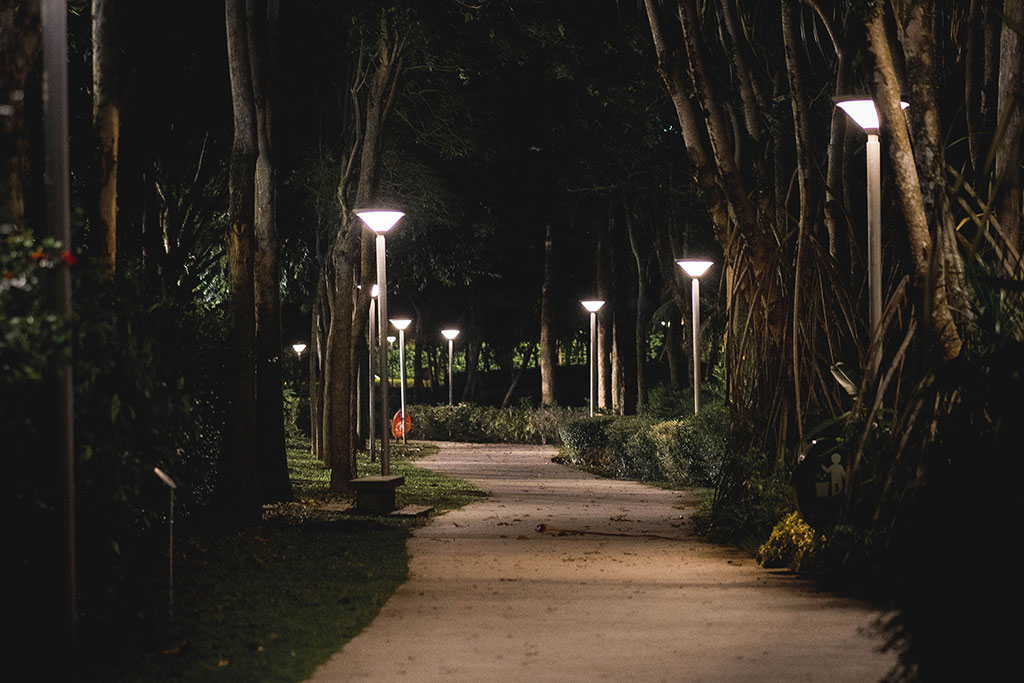
Good path lighting should feel natural and comfortable.
The purpose is to:
On many Florida properties, fixture spacing becomes inconsistent over time because of:
Sometimes simply resetting and realigning fixtures dramatically improves the appearance of an entire property at night.
Especially around:
Moonlighting remains one of the most underutilized techniques in landscape lighting.
This method places fixtures higher within tree canopies and directs light downward to mimic natural moonlight filtering through branches.
When done properly, the effect feels:
Instead of drawing attention directly to fixtures, moonlighting creates ambient illumination across:
Florida’s dense tree canopies make this technique especially effective because the moving shadows create a more organic nighttime environment.
The result usually feels far more upscale than simply increasing brightness throughout the property.
Many outdoor spaces become visually disconnected after sunset simply because lighting was never integrated into the original hardscape design.
This is especially common around:
Without lighting, these spaces often feel unfinished at night.
Integrated hardscape lighting helps:
One issue we commonly see is lighting being added after hardscapes are already complete.
That often leads to:
The strongest lighting systems are coordinated alongside the hardscape plan from the beginning.
One of the cleanest ways to create visual drama in Florida landscapes is through silhouetting.
This technique places light behind plants or structures to create bold shadows and contrast against nearby surfaces.
It works especially well with:
Silhouetting helps landscapes feel:
And unlike simply adding brighter fixtures everywhere, it creates visual interest without overwhelming the property with excessive light.
One of the biggest mistakes properties make is trying to eliminate every shadow.
Strong landscape lighting actually depends on contrast.
Too much brightness flattens the landscape and creates:
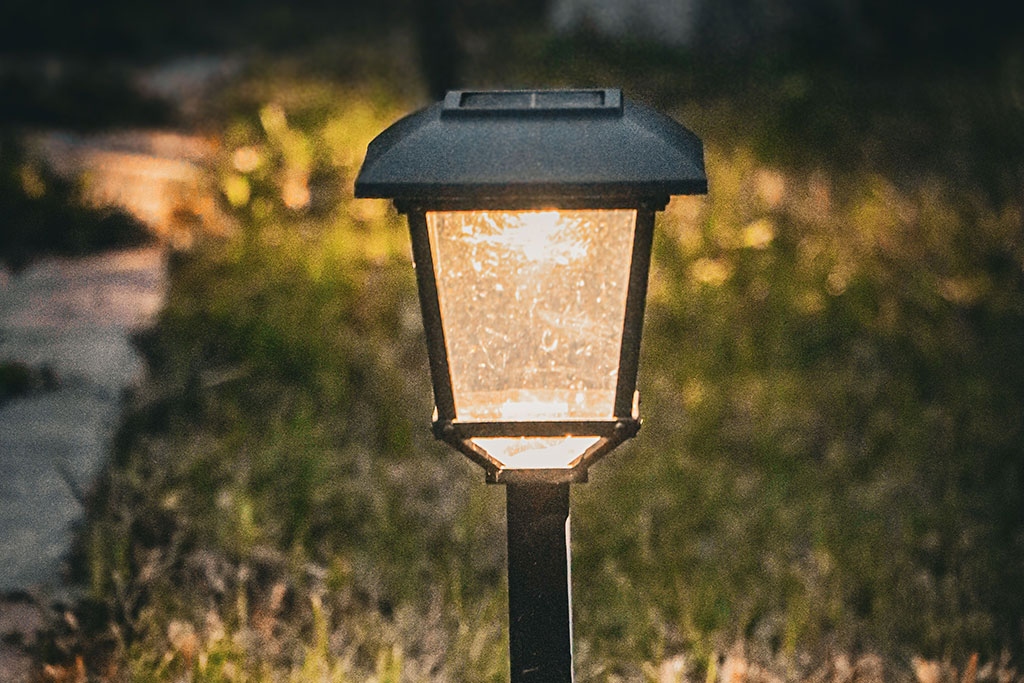
The best lighting systems create layers between:
When lighting is balanced properly, people notice how the property feels long before they notice individual fixtures.
That is usually the sign of a well-designed system.
A landscape lighting system should still perform properly years after installation — not just during the initial walkthrough.
That is why long-term planning matters.
On Florida properties, maintenance considerations should include:
Many lighting problems begin quietly long before fixtures actually fail.
Small issues like:
...gradually reduce the quality of the entire system over time.
Routine inspections make a major difference in long-term performance.
At Allegiance Landscaping, lighting recommendations are designed around both appearance and long-term functionality.
For commercial properties and managed communities throughout Alachua County, our team evaluates:
Our goal is to help properties create lighting systems that continue performing cleanly under Florida conditions long after installation is complete.
This proactive approach reflects one of our core company values:
Own Every Detail.
Because often, the difference between a property that feels professionally maintained at night and one that feels unfinished comes down to details most people never consciously notice.
Landscape lighting is no longer just about visibility after dark.
For Florida commercial properties and managed communities, properly designed lighting helps:
And when lighting is integrated thoughtfully into the landscape itself, the property does not simply become brighter after sunset.
It feels more complete.